newsletter
Get useful insight and advice in your inbox.
Thank you! Your submission has been received!
Oops! Something went wrong while submitting the form.

-8.png)


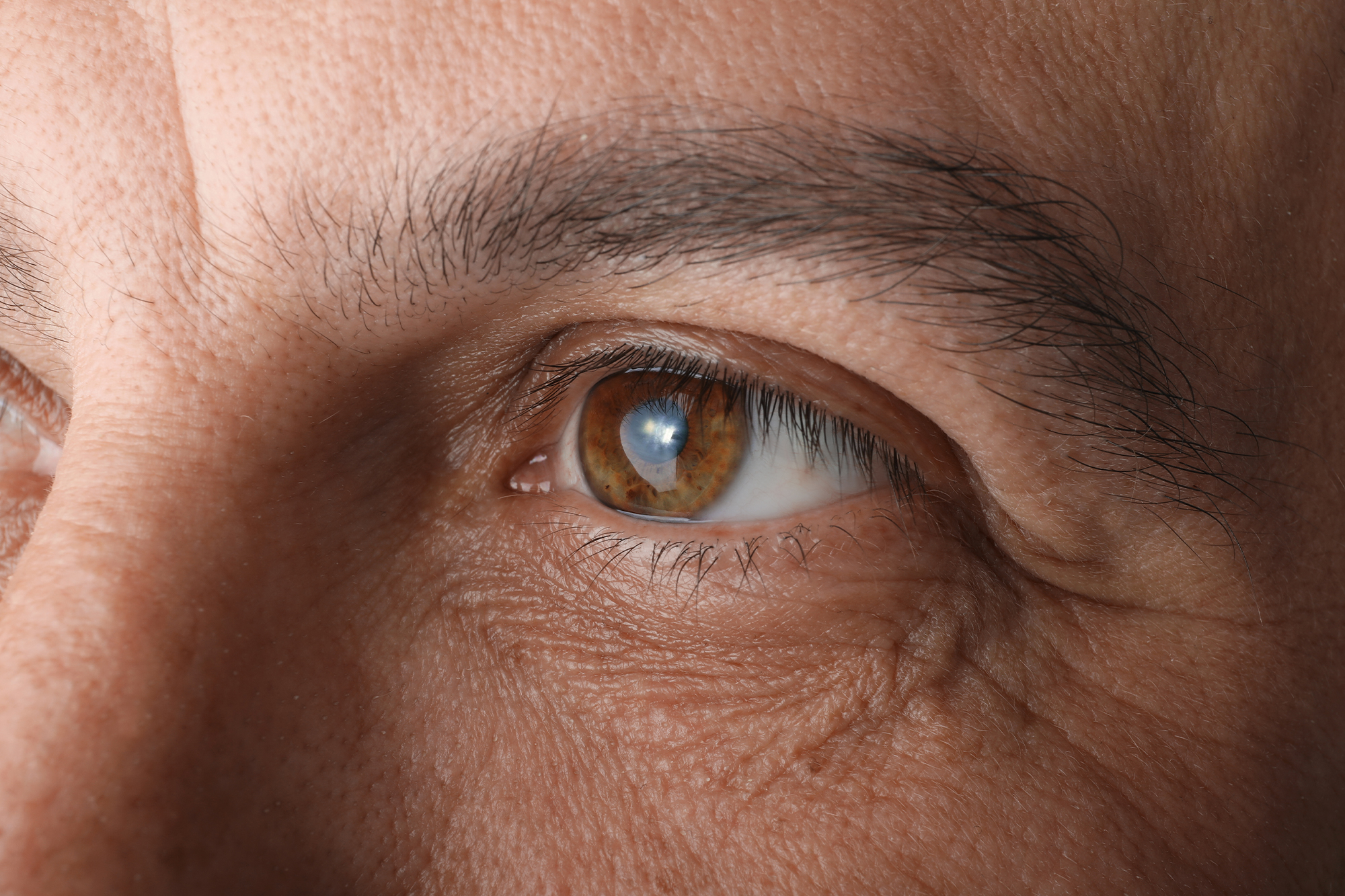
At 6 months post-cataract surgery, not only are you considered to be fully recovered, but you’ll likely be experiencing the very best of your implant.
When we look at the cataract surgery recovery timeline, most of the physical healing process is complete by the 8-week mark. But the brain-eye connection is another matter. Because cataracts are so slow to form, the brain has years to adapt to the reduction in light flow through the eye. With age-related cataracts in particular, the first you know about them is when they’re picked up on a regular eye test—it’s not because you notice symptoms.
This shows how subtle the changes are over a long, long period. However, when you have a cataract operation, the correct flow of light is restored in an instant—and your brain needs a bit of time to adjust to that.
While many people experience dramatically improved vision almost straight after their procedure, a significant number take weeks or months to adapt. Common post-op symptoms include:
The last 3 generally resolve quite quickly, improving over the first few days and weeks. But blurred vision, light sensitivity, and floaters may take a little longer. Blurriness and issues with bright lights require the brain to reignite old pathways used before the cataract developed, and this can take a little time.
Floaters tend to gradually reduce as they naturally get absorbed within the vitreous. However, any particularly large or bothersome ones can be removed with a simple laser treatment in the doctor’s office (but that’s another subject entirely…).
By the 6-month point, you should be benefiting from the long-term results of your cataract surgery, which means:
And, for those who’ve had a premium lens fitted, you may well be benefitting from a life without any prescriptive lenses at all…!
The greatest risk for anyone after a cataract operation is a simple-to-cure problem called Posterior Capsule Opacification (PCO). This is where proteins within the eye clump together on the part of the lens capsule that the intraocular lens is attached to. While the symptoms are similar to cataracts (yellowing of colors, halos around lights, blurry vision, etc.), it’s not the cataract returning, despite PCO often being referred to as a “secondary cataract”.
It can easily be treated by a short procedure by your eye doctor. PCO can happen at any point after your cataract procedure, but is most common from 1-5 years post-op. This is often picked up during an eye health follow-up, making it essential that you schedule them in regularly. How often these should be depends on many factors, including:
The vast majority of cataract operations aren’t just successful (more than 99%), they are quite literally life changing. With eyesight probably being the most important of all the senses, restoring yours to what could potentially be 20:20 vision or better, plus the chance of ditching the eyeglasses for good, is a true marvel of surgical technology.
The Modern Cataract Surgery Clinic is one of the most advanced facilities in the US, offering dedicated surgical care, the latest procedures, and cutting-edge intraocular lens (IOL) options.
Discover more at https://www.moderncataractsurgery.com/