newsletter
Get useful insight and advice in your inbox.
Thank you! Your submission has been received!
Oops! Something went wrong while submitting the form.

-8.png)


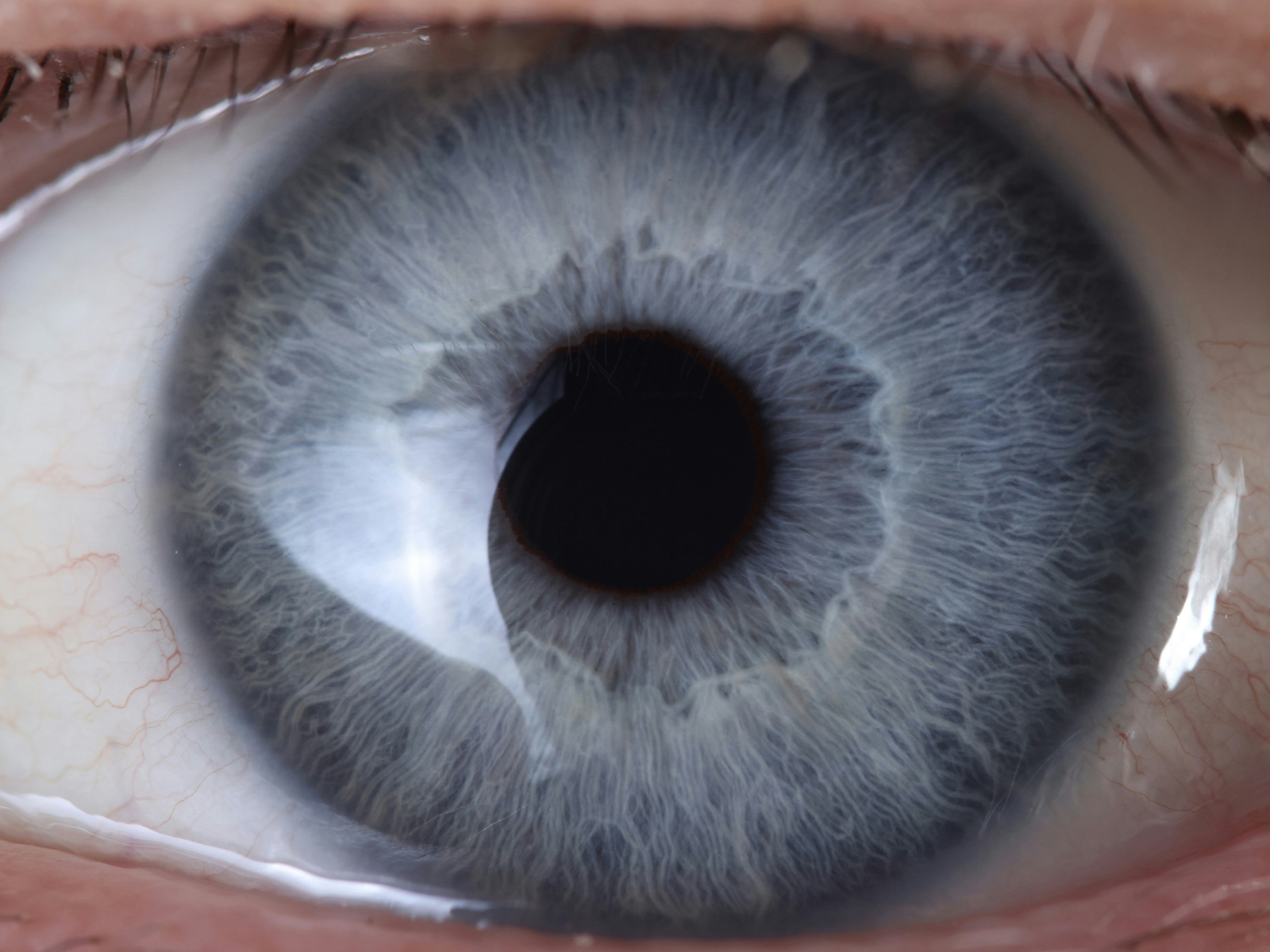
Yes, you can have cataract surgery after LASIK, and the operation itself is the same. What changes is the math. Calculating the power of the new lens that replaces your cataract depends on measuring the front surface of the cornea, and LASIK permanently reshaped that surface years ago. Getting your prescription right the first time depends on the surgeon's measurement strategy, not on luck. Roughly 1.2 million LASIK procedures were performed in the United States in 1999 and 2000 alone, and that first large cohort is now squarely in the cataract age window. If you are one of them, this guide explains exactly what is different about your eye and how a subspecialty surgeon plans around it.
The cataract operation, phacoemulsification with intraocular lens (IOL) implantation, is mechanically identical whether or not you had LASIK. The difference is entirely in the planning, and it comes down to one measurement: the cornea.
To choose the correct IOL power, a surgeon measures the curvature of your cornea (keratometry) and the length of your eye (axial length). LASIK works by flattening or steepening the central cornea with an excimer laser to correct nearsightedness or farsightedness. That treated central zone is the exact area a biometer measures to calculate your lens. The cornea is doing its job perfectly. It just no longer matches the assumptions built into the standard calculation.
Traditional IOL power formulas estimate the curvature of the back of the cornea from the curvature of the front, a relationship that holds true in eyes that have never had refractive surgery. LASIK breaks that relationship. After myopic LASIK, the front of the cornea is flatter than the back, and the standard formula reads the flat front and assumes a correspondingly flat back. It guesses wrong.
When a standard formula is applied to a post-myopic-LASIK eye, it tends to recommend a lens that leaves the patient farsighted, a hyperopic surprise. The patient wakes up after cataract surgery seeing worse at distance than expected and needing glasses again. This is the single most common source of dissatisfaction in this group, and it is largely preventable with the right approach. We do not minimize it, and we do not promise a risk-free result. We plan to avoid it.
The fix is to abandon the standard formula and use calculation methods built specifically for treated corneas, then to cross-check them against each other.
The 2026 standard of care for a post-LASIK eye uses one or more dedicated post-refractive methods:
No single post-refractive formula is perfect for every treated eye. The discipline is to run several, look at the range of recommended powers, and choose a target that the methods agree on. When they disagree, that disagreement is itself information: it tells us the eye is harder to predict, and it changes how we counsel you about the likelihood of needing a touch-up later. A surgeon who runs one formula and reads off one number is not planning a post-LASIK case correctly.
The measurement device matters as much as the formula. We use swept-source optical biometry (IOLMaster 700 or Argos), which measures the eye with infrared light and, importantly, can measure the posterior cornea directly through total keratometry rather than estimating it. In a post-LASIK eye, where the front-to-back assumption is exactly what broke, measuring the back of the cornea instead of guessing it is a meaningful improvement.
One of the first questions we ask a post-LASIK patient is whether they can find their old records. The honest answer about those records is that they help, but they are not required, and we will not promise to recover them for you. We help you try.
The three useful data points from before your LASIK are your pre-LASIK glasses prescription, your pre-LASIK corneal curvature readings (the K-readings), and confirmation of which procedure you had (LASIK, PRK, or RK). The amount of correction your LASIK applied, derived from the change in your prescription, lets certain formulas reconstruct your original corneal shape. Even a rough old prescription from an optometrist's chart helps.
Here is the reassuring part. The ASCRS post-refractive calculator and the Barrett True-K formula both have a "no prior data" pathway. They were specifically designed for the reality that most patients cannot find paperwork from a procedure done 20 years ago. The accuracy is slightly better with historical data, but a well-measured eye with no history is still planned to a high standard.
Before you give up on records, it is worth a short hunt. Your original LASIK surgeon's office may still have your chart. Your primary optometrist may have a pre-LASIK exam on file. An old pair of glasses can sometimes be read by a lab to recover the prescription. We tell patients it is worth one round of phone calls, and then we proceed confidently with or without the result.
Lens choice in a treated eye is a different conversation from a virgin eye. The irregular corneal surface narrows the field. We do not name a single best lens for everyone, but one technology has a stronger case in this population than any other.
The Light Adjustable Lens (LAL) is the strongest argument in the entire post-LASIK category, and the reason is simple: it removes the math from the equation. Every other lens locks in its power the moment it is implanted, so the result depends entirely on a calculation we already know is harder in these eyes. The LAL is implanted at a best estimate, and then, after your eye has healed and we can measure the actual refraction, the power of the lens is adjusted with a series of ultraviolet light treatments and then locked in. For a patient whose calculation carries extra uncertainty, the ability to fine-tune after the fact is exactly the right tool. How LAL works after surgery is covered in depth on our dedicated page. The trade-off is a commitment to UV-blocking glasses until the lens is locked, and several follow-up adjustment visits.
A standard monofocal lens such as the Alcon Clareon or the Johnson & Johnson TECNIS Eyhance is a reliable, predictable choice when a patient wants excellent distance vision and is comfortable using readers for near work. The Eyhance is a monofocal with a slightly extended range that many post-LASIK patients appreciate. Monofocals are forgiving on an irregular cornea because they ask less of the optical surface than a multifocal does.
Extended depth of focus lenses such as the Alcon Vivity EDOF and the TECNIS Symfony OptiBlue can work in carefully selected post-LASIK eyes, particularly those with a regular, well-centered ablation. They give a range of functional vision with fewer nighttime halos than a trifocal. We use them selectively and only after a clean corneal topography confirms the surface will support them.
Trifocal lenses such as the PanOptix trifocal depend on splitting incoming light cleanly across several focal points, which in turn depends on a smooth, regular cornea. A LASIK-treated cornea, especially one with a decentered or aggressive ablation, can degrade that image quality and amplify glare and halos. In most post-LASIK eyes we steer away from trifocals. There are exceptions in eyes with pristine, well-centered treatments, but the default answer is caution. We walk through the full match IOL to your lifestyle framework and the broader premium lens upgrades picture during your counseling visit.
Radial keratotomy, the spoke-pattern incisional surgery common in the 1980s and early 1990s, is the most challenging post-refractive cornea. The radial incisions can swell when fluid enters the eye during surgery, temporarily flattening the cornea and shifting the prescription toward farsightedness for days to weeks before settling. We plan for this by aiming for a slightly nearsighted target early on, knowing the eye will drift, and we strongly favor a Light Adjustable Lens so the final power can be set after the cornea stabilizes. RK eyes are a planned case, never a templated one.
Most LASIK was done to correct nearsightedness, but a minority of patients had hyperopic LASIK to correct farsightedness, which steepens rather than flattens the central cornea. The formulas handle this, but the surgeon has to know it happened, which is another reason confirming your original procedure type matters.
Some patients had LASIK set for monovision, with one eye corrected for distance and the other left slightly nearsighted for reading. If that arrangement worked well for you for years, we can often recreate it with your IOLs. If it never quite suited you, cataract surgery is a clean opportunity to reset both eyes to a balanced plan. This is a conversation to have explicitly before surgery.
Recovery from the cataract operation itself is the same as for any eye: a day or two of mild scratchiness, a short course of anti-inflammatory and antibiotic drops, and steady improvement over the first week. Full visual stabilization, especially the final refraction we use to judge accuracy, takes about a month in a standard eye and can take longer in an RK eye. Our general what cataract recovery looks like page covers the standard timeline.
Because the calculation in a post-LASIK eye carries more uncertainty, there is a real chance the result lands close to but not exactly on target. This is not a complication. It is the expected behavior of a harder calculation, and it is why we build a fine-tuning plan into the consent conversation rather than treating a residual prescription as a failure.
If you are off target after healing, there are three tools. A Light Adjustable Lens is adjusted with UV light, no further surgery required. A small corneal laser enhancement (a LASIK or PRK touch-up) can correct residual error on the cornea if the tissue and surface allow. An IOL exchange, swapping the implanted lens for a different power, is the least common and is reserved for larger misses. We tell patients which of these is most likely for them before surgery, not after.
We are honest that the predictable target range in a post-LASIK eye is wider than in an untouched eye. The goal is still excellent vision, and most post-LASIK patients achieve it. But the probability of needing a second step is higher, and we would rather you hear that number before surgery than discover it afterward.
In a post-refractive patient, the first eye teaches us about the second. We typically operate on the eye with the more advanced cataract first, then study its actual refractive result before finalizing the lens power for the second eye. If the first eye lands slightly off target, we adjust the plan for the second eye accordingly. This staged learning is one of the most powerful tools we have in these cases.
A subspecialty refractive cataract practice will answer each of these in terms specific to your eye. You can read more about our practice and our approach to complex cataract cases, and review our overview of comprehensive cataract surgery and femtosecond laser cataract surgery. A primer on lens choices is in our intraocular lens options guide. This article was prepared by the surgical team at Modern Cataract Surgery, including Brent Bellotte, MD.
Often yes. A small laser enhancement on the cornea, sometimes called a LASIK touch-up, can correct residual refractive error after cataract surgery if your cornea has enough tissue and the surface is healthy. We assess corneal thickness and topography first. A light adjustable lens avoids the question entirely by tuning the lens itself instead of the cornea.
It can. A prior LASIK or PRK cornea is more irregular than an untouched one, which makes multifocal and trifocal lenses less predictable because they depend on a clean optical surface. The light adjustable lens and monofocal lenses are usually the safer choices in post-refractive eyes, and the light adjustable lens is often the strongest option.
LASIK does not change when a cataract forms. Cataract is age-related and develops on its own timeline, typically in the 60s and 70s. The large wave of patients who had LASIK in the late 1990s and early 2000s is now reaching cataract age, which is why post-LASIK cataract surgery has become so common.
Refractive surprise, meaning the final glasses prescription lands further from the target than planned, is more common in post-LASIK eyes than in untouched eyes. We reduce that risk with post-refractive formulas, multiple measurements, and lenses that can be adjusted afterward. Honest expectation setting before surgery is the most important step.
Medicare covers the cataract surgery itself and a standard monofocal lens when the cataract is visually significant, the same as for any eye. Medicare does not cover the refractive upgrade portion of a premium lens such as a light adjustable lens or trifocal. That upgrade is a patient-pay cost. Confirm specifics with your plan.
The principle is the same, but radial keratotomy eyes need extra care. The radial incisions can swell during and after surgery, causing the prescription to shift for weeks. We plan for a hyperopic target early on and often favor a light adjustable lens so the final power can be set once the cornea settles.
If you had LASIK, PRK, or RK and are now noticing cataract symptoms, the most useful related reads are our pages on cataract surgery recovery and potential side effects to understand, and our deep dive on the Light Adjustable Lens (LAL). When you are ready, schedule a cataract evaluation and bring any old records you can find.